Showing posts with label poetry. Show all posts

Sunday, March 30, 2014

We'll Have Plenty of Time Together


We'll Have Plenty of Time Together

I didn't go to church today,
I trust Mother Divine will understand. 
The sun was shining in a cloudless sky
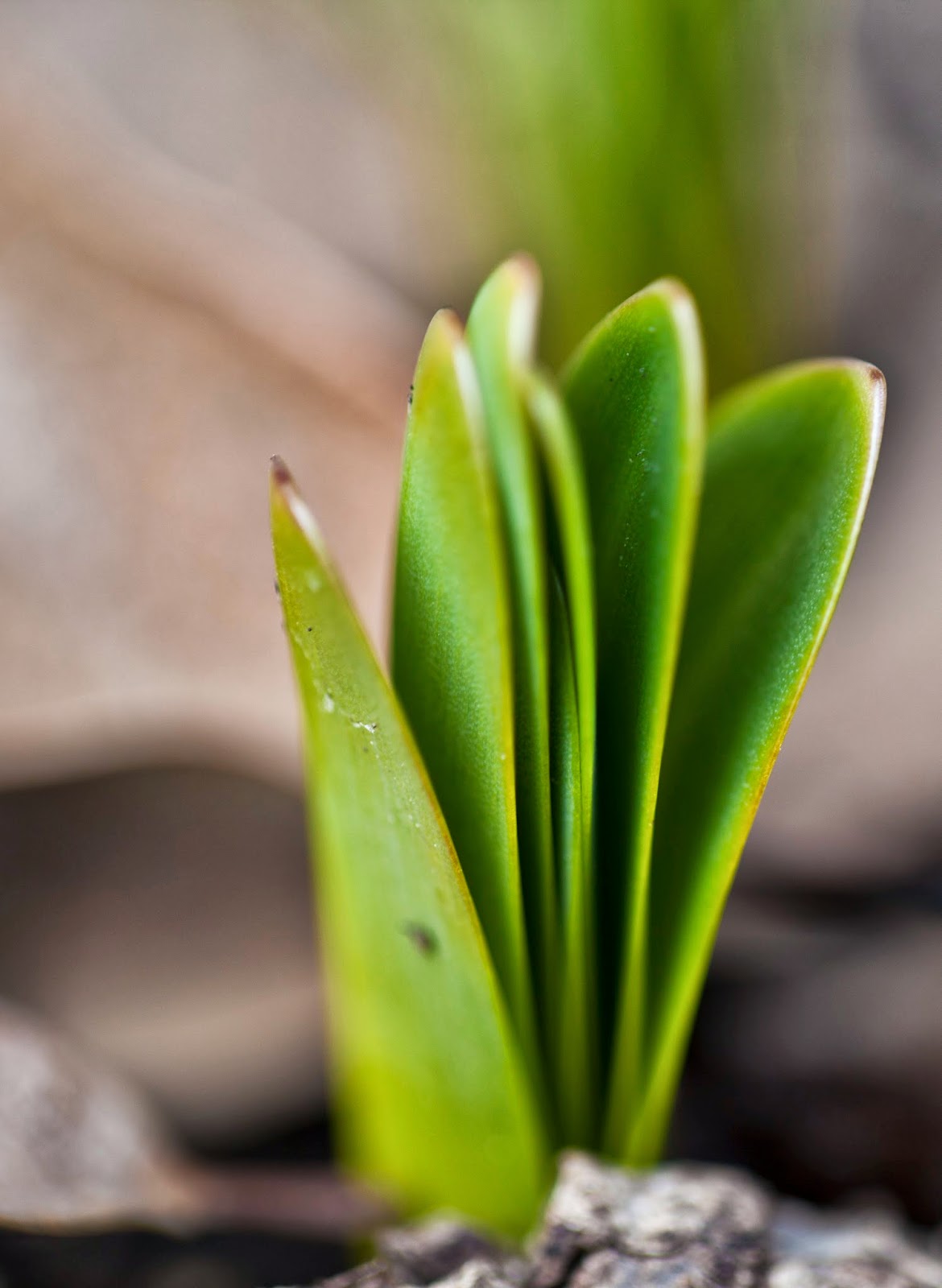
on daffodil shoots the height of my hand.
She knows, She knows how brief my play,
how short this spell of soft spring weather.
She knows when I am gone from here
we'll have plenty of time together.

After "I Didn't Go to Church Today" by Ogden Nash


I Didn't Go to Church Today

by Ogden Nash

I didn't go to church today,
I trust the Lord to understand.
The surf was swirling blue and white,
The children swirling on the sand.
He knows, He knows how brief my stay,
How brief this spell of summer weather,
He knows when I am said and done
We'll have plenty of time together.

From The Best of Ogden Nash (c) 2007 Ivan R. Dee


          Ogden, I didn't go to church today either. No swirling surf in Iowa, but after the long winter, the daffodils are daringly poking green shoots up through last year's decaying leaf litter and the sun is perfectly warm for a long walk in the woods. 
          Ever since our 17-year-old kitty Pepper died, I have been having unexpected episodes of feeling my mortality, like a sudden electric jolt that stops me in mid-step. It's not the end of the body that shocks me into a momentary panic so much as the piercing knowledge that the sense of self that lives in my mind will all too soon be gone forever. 
          This existential angst is an old, familiar feeling that commenced at age 13. It felt like I was falling into a black hole, to be extinguished, eradicated, annihilated, forever and ever, even though the rest of the world might go on without end. I was utterly terrorized by the thought that "I" am just a brief blip in time, and nothing I heard in church about the immortality of the soul consoled me for the eternal loss of this particular mortal self. 
          Now, as the years advance and the moment of termination approaches, I do have more of a belief in the soul, but it seems like a sort of hazy cloud, a ubiquitous field without much distinct personality, at least not this personality, which will never ever be replicated. 
          Because I have such a keen sense of my time being limited, I feel an urgency to experience as much as I possibly can of this amazing world with this unique mind-body. So I spend as much time as possible in nature, adoring her ephemeral creation in a seemingly endless cycle of recycling into ever-new variations of old material.
          Perhaps when the body stops, this life will just seem like a dimly remembered dream, slipping away without any great sense of loss as the higher self entertains entrancing new possibilities. 
          Pepper, you whose body is now nourishing the roots of a Sassafras tree, how is it?

Monday, November 7, 2011

above the golden


above the golden
leaves of the piebald sycamore,
cloud stairs leading up

Shinny up the brown 
trunk of the sycamore. 
Climb from white 
limb to white limb 
through golden leaves. 
At the top, step onto soft 
white cloud stairs. 
Ascend into azure sky.

Saturday, August 20, 2011

ducks laughing hee hee!


ducks laughing hee hee!
roosters crying aha! ha!
blend with the silence


Ketut comes by on his motorbike around 6 am to pick me up for a field trip, a rice field trip. We drive along the south end of Monkey Forest, then turn down a path through rice fields to a small modern house he's building as a rental. It has two rooms, one up, one down, each with a large marble bathroom. There is a little kitchen area outside the main building. The floors upstairs are wood and there are two balconies with views of rice paddies, a small stream and Mt. Gunung Agung to the east. The holiest mountain on Bali looks like Fuji-san. Ketut comes here every morning to do yoga asanas for an hour and a half. This is not usual for Balinese, whose spiritual practice is primarily praying and making offerings. Ketut has observed Robin and me do asanas in the morning and she always introduces me as a Hindu mantra meditator, so he must feel that I will appreciate his yoga practice, and perhaps I might know someone who would like to rent his house when it's finished. He strips to shorts and does a set of serious asanas, beginning and ending with a short, full-chested chant. I do my usual quarter of an hour of asanas and then meditate. The silence inside blends with the sound of roosters crying, aha! ha!, a gaggle of ducks sloshing through the rice paddy, laughing hee hee hee!, a bamboo clacker clack-clacking, and a man yelling to scare away crows as he makes the rounds of the ripening rice heads, bowing low. After we finish our respective morning rituals, we talk for awhile. He asks me if I do japa. I tell him that's what I was just doing, practicing Transcendental Meditation, as taught by Maharishi Mahesh Yogi, which involves effortlessly thinking a mantra with eyes closed. He says he repeats the Mahamrityunjaya mantra, the "great death-defying" mantra dedicated to Lord Shiva. We talk about my poetry book, which I am having published here, on handmade Balinese paper. Perhaps because I am a poet, Ketut asks me to name this house. I gaze out from the balcony, searching for a name that will reflect the feeling of this little house and its setting. There is the little stream, the majestic mountain. Then I notice a large tree with dark shiny leaves and ask him its name. He says it's a special kind of mango, manga genga, with small, sweet fruit. I smile. Mangoes are my favorite fruit and I also like the musical sound of the name. "That's a good name," I say, "because this house is small and sweet, with a sweet view." He smiles. "Maybe you can stay here, write a book."

Monday, May 16, 2011

temple of the sun

 
temple of the sun
resonates with the golden
flute of the traveler

Paul Horn, known as the Traveler, played his flute in the Temple of the Sun at Machu Picchu. He has also played in many sacred spaces around the world, including the Taj Mahal, the Grand Canyon, the Potala and Mt. Kailash in Tibet, the Great Pyramid at Giza, and with orca whales. It was "Inside" his recording in the Taj Mahal in 1968 that launched the genre of New Age music. Paul was with Maharishi Mahesh Yogi in Rishikesh, India, in 1967, at the same time as the Beatles and Donovan, and he became one of Maharishi's first teachers of Transcendental Meditation. This year Paul played in the Golden Dome on the campus of Maharishi University in Fairfield, Iowa. His soulful melodies on a golden flute reverberated in the atmosphere of deep, lively silence that permeates the Golden Dome.

Tuesday, May 10, 2011

high on a white wall


high on a white wall
a small window filled with bundles
blocking the view

Windows are usually designed to let light in and allow those inside to see out, though not always those outside to see in. This small window placed high on a white adobe wall seems designed to allow a view of the main street of the pueblo, while disallowing a view inside. However, the pile of bundles would make it difficult for anyone to see out. The entire place feels unusually empty and quiet for an Andean pueblo: no mototaxis, no triciclos, no people, no dogs, not even chickens roaming the street. Perhaps everyone is taking a siesta, or out working in the fields and pastures. Later, we do see two women and then a group of children coming home from school. But even then, silence prevails. Perhaps it is the influence of the temple of the moon on the mountain above the pueblo, a place of deep solitude and silence.

Sunday, May 8, 2011

moon temple pueblo


moon temple pueblo –
white crescents cascading down
adobe brick wall

The temple of the moon, on a hill beneath a mountain, is a magical place, and even the little pueblo at the foot of the hill is full of mystery, like this adobe wall beneath a tile roof. Someone has painted some words on the brick wall and over the words, a series of overlapping white crescents, the paint dripping down and nearly obscuring the letters. I can make out "Altalde" below the crescents, but not the letters above. Is this a political slogan? The presidential election is about to take place and the names of candidates and parties are painted on walls everywhere. But if this is a name, did someone purposefully cover it up? The white paint looks like crescent moons, and the temple of the moon on the hillside above is dedicated to the mysterious, changeable feminine aspect. The roof tiles repeat the feminine curves of the crescents. The entire wall looks like an abstract painting, an act of creativity, intensely feminine.

Saturday, May 7, 2011

between the train tracks


between the train tracks
and hot springs a young mother
nurses her baby

Beyond bearing a baby, the most intimate act of motherhood is nursing. This young mother is sitting outside her little shop on the steep street that leads from the train tracks to the hot springs in Aguas Calientes, quietly feeding her infant, completely at ease while all sorts of people pass by.

mama with bebe


mama with bebe
wrapped in a red k'eperina
snug against her heart

This mother and baby are standing in the pedestrian street outside the school with its colorful murals. She is carrying her baby in a k'eperina, Quechua for a handwoven rectangular cloth used for carrying children and other goods. Often red, with intricate striped designs, it is used by both men and women, even by those who wear modern dress, like this young mother in jeans and a sweater. The baby wears a hand knit chullo on his head. This first cap is traditionally knit by his father and the color white indicates that the baby is a boy.

Friday, May 6, 2011

blue door, yellow wall


blue door, yellow wall –
reflections of sky and sun 
transform wood and clay

We are on the bus, leaving Cusco for our destination in the Sacred Valley. Fascinated by the colors and textures of the buildings, I keep up a steady barrage of snapshots, hoping to capture a small fragment of the passing scenery. I am always amazed by a lucky catch like this one. The bright blue paint on the worn wooden door and the ocher plaster on the adobe wall bring the essence of the Andean sky and sun down to earth. So it is with earth-bound humans, always reaching for what lies beyond.

Thursday, May 5, 2011

life's little hurdles


life's little hurdles –
climbing over a fence to chase
a pig in the mud

After the bus got stuck in the mud high on the hill, we walked down to the highway to wait for another bus to pick us up. A little pueblo is stretched out on the lower part of the hill. It starts to rain so we take shelter under an overhanging roof. While I am looking over the adobe wall next door at all the laundry getting wet, I spot a black pig trotting under the clothes line. Then a woman climbs over a low fence and chases the pig through the muddy yard. Life in a pueblo is lived out in the open and close to the earth, sometimes literally in the mud.

Monday, May 2, 2011

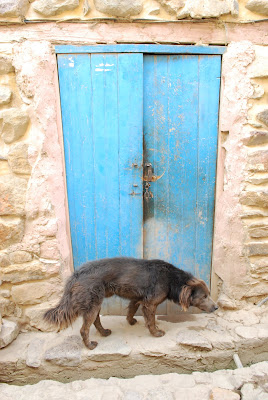
latch on a blue door


latch on a blue door
on a stone house on a stone street –
dog waiting outside

Portals fascinate me, that gap between outside and inside, here and there, open or closed, allowing in or keeping out or passing through The latch on this door in Ollantaytambo has obviously been used a lot, from the circular mark worn through the blue paint, but there is no lock on the latch and the door is slightly ajar. Anyone might enter, or exit, at any moment. The dog, standing outside, head down, does not seem to be guarding the door but rather to be patiently waiting for someone to appear.

Thursday, April 28, 2011

an earthenware bowl


an earthenware bowl
of sopa de kinwa y choclo
with mate de coca

Peruvians have a genuine ethnic cuisine based on many indigenous ingredients. Everything has a distinct, delicious flavor. Maybe it's the soil combined with organic farming. The midday meal begins with sopa, followed by salada, then the main course and dessert. At this restaurant in Pisaq, the soup is made with kinwa and choclo, and we can choose mate de coca or fresh lemonade. Kinwa (quinoa), choclo (a type of maize), and coca were all considered sacred by the Inkas, who used them in their ceremonies, and they are still used in this manner by indigenous Andeans. The word kinwa means "moon" in Quechua, and the cooked seeds do look like little moons and crescents. The Inkas called it chisaya mama, "the mother of grains." The Inka emperor traditionally sowed the first seeds of the season using a gold implement. The Spanish conquistadors forbade the cultivation of quinoa due to its association with non-Christian ceremonies. Technically a seed, it has more protein than any grain. Gluten free, it is easy to digest and has a nutty flavor. Choclo has large pale yellow kernels. Very popular boiled on the cob, it also has a nutty flavor. Mate de coca is made from coca leaves. Indigenous people chew the leaves as a stimulant, forming a wad in the cheek. Everyone in Peru consumes it as a tea, which tastes like green tea, slightly bitter. It is held to be especially beneficial to health altitudes, so we drink a lot of mate de coca.

Tuesday, April 26, 2011

inside turquoise doors


inside turquoise doors 
a little boy peers out as
his brother runs to school

Traveling on yet another bus, tired but unwilling to take my eyes off the passing scenery, I keep glimpsing fleeting moments of beauty. I keep my camera turned on and raised to the window. Somewhere between Urubamba and Ollantaytambo, I spot a little boy in a blue school uniform and backpack leaping away from a pair of turquoise doors. When I look at the frozen moment on the view screen, I notice the other little boy peeping from behind the closed door, perhaps wistfully watching his older brother run off to school.

Wednesday, March 16, 2011

one lone gray duck swims


one lone gray duck swims
away tracing a blue V
in the pink water

The Canada Geese have vanished and the ponds seem strangely empty after seeing dozens of them crowding the water and shores. Then yesterday a new wave of migrants appeared, half a dozen ducks dabbling and dipping on Osage Pond. But this morning in the rosy light of dawn, only one lone duck remains. From the white speculum it looks to be a Gadwall, one of the most common migratory puddle ducks in the Mississippi Flyway. The gray duck swam away when I stopped, tracing a beautiful blue V in the reflection of pink sky on the still water. Somehow, this singular duck creates a more intense feeling of loneliness than a completely empty pond.

Thursday, March 10, 2011

copper-gold sunset


copper-gold sunset –
burnt sienna big bluestem
between field and road,
remnant of prairie thriving
on strips of unbroken ground

Before the steel plow, big bluestem was one of the most common perennial bunch grasses in the tallgrass prairie that covered the Midwest. Big bluestem can grow as tall as three meters. The roots go deep, sending out tough rhizomes which form an incredibly strong sod. In an area devoid of trees or rocks, early settlers used blocks of sod to build their first dwellings, called “soddies.” This sturdy grass, along with its cousin, little bluestem, is so called because the new shoots in spring turn blue-purple at the base. In autumn the grass turns a deep orange, forming a colorful stand throughout winter. Big bluestem is also called “turkey foot” because the seed heads have three spike-like projections. Big bluestem frequently grows in isolated clumps along roadsides where the ground is undisturbed. However, to flourish, this prairie grass needs occasional fire, either set by lightning or by humans, to eliminate competing trees and shrubs.

Thursday, March 3, 2011

moon over turquoise


moon over turquoise
Lake Pukaki – pink clouds
above Aoraki

From our tents on the shore of Lake Pukaki, we have a beautiful view of Aoraki and his two brother mountains through a gap in the hills. After sunset the clouds put on a moonlight sonata full of fans, curlicues and saucers. Lake Pukaki is the largest of three alpine lakes formed when receding glaciers blocked the valleys with terminal moraines. The lake is fed by the Tasman River, which has its source in the Tasman Glacier. Finely ground rock particles brought down by melt water from the glacier gives the lake its turquoise color

Thursday, February 24, 2011

portrait of the writer


portrait of the writer
as a young man wrapped
in a burgundy blanket
dreaming stories

Portrait of my son, Noah. He is in Idaho, I am in Iowa, but we communicate through Skype. I can see the stories forming behind his eyes. His blog www.athousandsounds.wordpress.com inspired me to start my blog www.curvingback.blogspot.com.

Wednesday, February 23, 2011

from a balcony


from a balcony
of a mosque in Srinagar
with inlaid ceilings
a young girl and old woman
peer at me as I pass by

This wooden mosque was built by the Persian who converted the Buddhists in Kashmir to Islam. The mosque is small, green and ornately decorated, with inlaid ceilings and wood carvings. I am allowed to climb a couple of steps and peak into the inner chamber, all crystal and gold. The chinar trees here must be 150 feet tall and 15 feet around, the upper limbs white. An old woman and a little girl peer down at me from a balcony as I pass by. The little girl, head bare, stares at me with a serious expression, but the woman, hair covered with a white scarf, smiles at me with her dark eyes.

Monday, February 7, 2011

fat white flakes falling


fat white flakes falling
on plowed shoulders where flocks of
dark-eyed juncos peck
at grass, flurry up, flashing
white sides of tails and bellies

No wild turkeys in the fields since the blizzard, but after the plow scraped of the snow from the shoulders of the roads, flocks of juncos gather to peck at grass and gravel. With their dark gray backs they are nearly invisible against the barren ground, but when I pass they fly up in a flurry, flashing the white sides of their tails and white bellies.

Wednesday, January 19, 2011

breaking through snow crust


breaking through snow crust,
three does with fawns in a row –
trailing after, not
too close, not too far, a young
buck with pronged antlers

We count three pairs of does and fawns as they walk through our yard between the house and the woods. Each fawn keeps close behind her mother and then there is a little space and another pair appear. One doe stops and looks south, away from the house, for a long moment. Finally, after all the females have gone into the woods and are out of sight, a yearling buck appears, hurrying a little, as if to catch up. But then he, too, stops and looks to the south, then turns his head over his shoulder for a scratch before moving on through the woods in the same direction. He must have been the fawn of one of the does the year before, as they stay with the mother for two years, but now that he has antlers, he keeps his singular distance.